
Mierau Medical Diagnostic and Coding Method
Postulate 3 Progressive Diagnostic Rendering
Statement
Diagnostic information SHALL be acquired progressively, with the level of diagnostic resolution increasing only as required to obtain relevant information for safe diagnostic reasoning.
Definition
Progressive Diagnostic Rendering describes a diagnostic process in which relevant information is obtained and represented in successive levels of resolution.
The first level provides a broad, low-resolution representation of the relevant medical situation.
Where this initial information indicates a need for further clarification, the diagnostic resolution may be increased through more specific or more detailed investigation.
Progressive Diagnostic Rendering therefore follows the principle:
broad and coarse first - focused and detailed where necessary.
Principle
The level of diagnostic resolution SHALL be appropriate to the current diagnostic need and SHALL be increased when the information already obtained indicates that greater resolution is required.
An investigation does not have to provide the maximum possible amount of information.
Its purpose is to provide sufficient relevant information to enable safe diagnostic reasoning.
A finding that cannot be identified at a particular level of resolution SHALL NOT automatically be regarded as excluded.
Rationale
Modern medicine provides investigations with very different levels of resolution and specificity.
A broad or preliminary investigation may be entirely appropriate as a first step while being insufficient to answer a more specific diagnostic question.
Consequently:
"No relevant finding detected."
and
"The relevant condition has been excluded."
are not necessarily equivalent statements.
Progressive Diagnostic Rendering makes this distinction explicit.
The process resembles the progressive construction of an image during an old modem transmission:
After the first pass, there may be no details - but we already know that it is definitely not green.
Further passes add resolution where the existing information indicates that this is necessary.
Practical Example
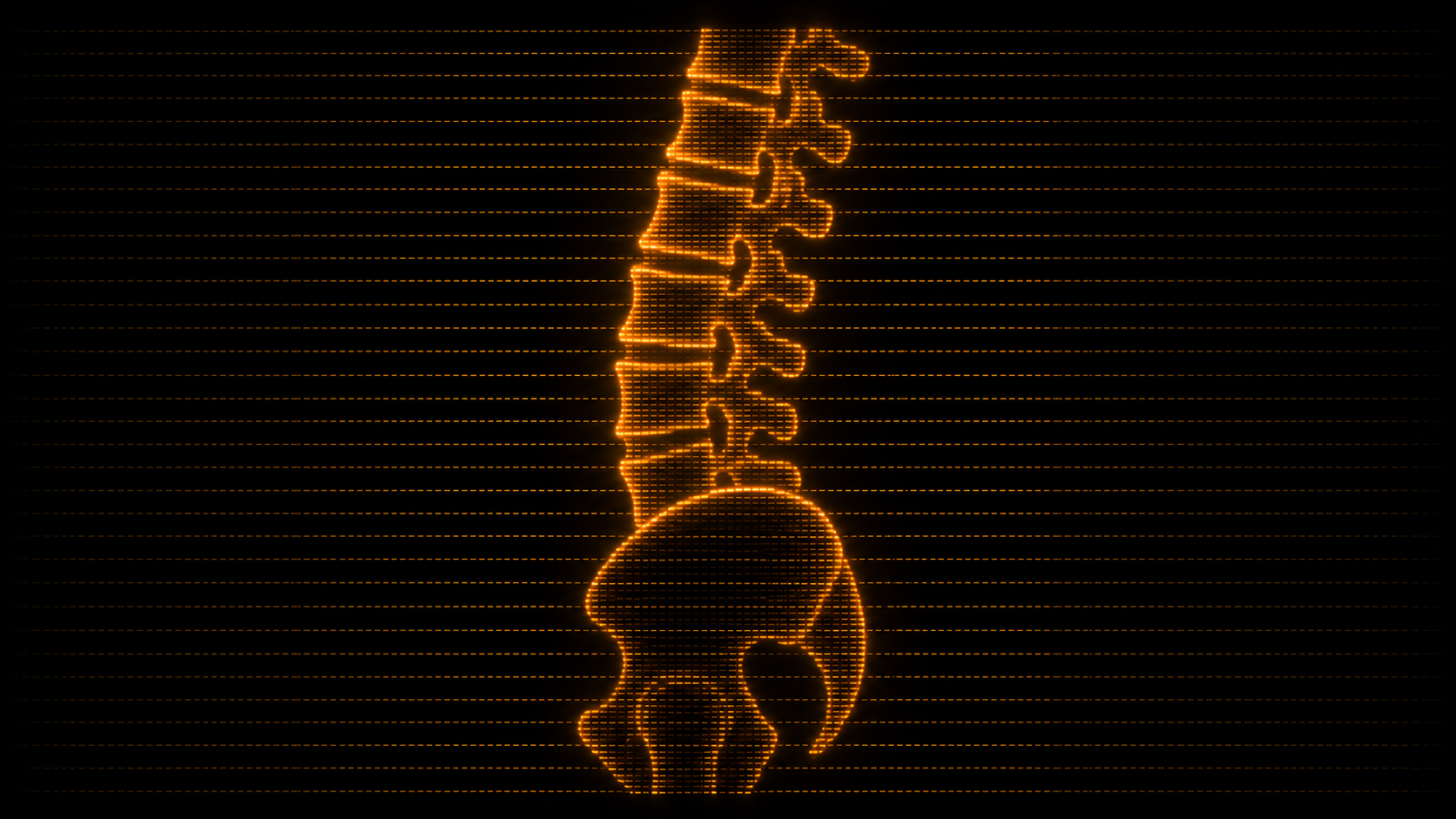
A patient presents with persistent back pain.
An initial examination may provide a broad overview without identifying a clear pathological finding.
This does not necessarily establish:
"There is no structural cause."
If the clinical course or subsequent information indicates a specific functional or structural question, a more appropriate or more specific investigation may be required.
In the example of the patient with longstanding lateral thigh pain:
Multiple conventional examinations and supine MRI examinations did not reveal an abnormal finding.
A subsequent functional radiographic examination of L3/L4 revealed:
5 mm vertebral slippage
The later investigation did not merely provide "more data".
It provided information at a different diagnostic resolution and under different conditions.
Database Requirements
The database SHALL be able to record the diagnostic resolution and scope of an investigation.
At minimum, the database should distinguish
- investigation performed
- medical question / purpose of the investigation
- method used
- conditions under which the investigation was performed
- scope of the investigation
- findings obtained
- limitations relevant to interpretation
- whether further resolution was indicated
The database SHALL NOT equate
no finding detected
with
condition excluded
unless the available information supports such an interpretation.
Implications
Progressive Diagnostic Rendering
- SHALL NOT mean that every patient requires increasingly complex investigations.
- SHALL NOT imply that higher resolution is always medically superior.
- SHALL NOT replace clinical judgment or specialist assessment.
- SHALL permit the diagnostic process to stop when sufficient relevant information has been obtained.
- SHALL permit further diagnostic resolution when existing information indicates that it is necessary.
- SHALL distinguish the resolution of an investigation from the certainty of a diagnosis.
The objective is therefore not
maximum diagnostic resolution
but
sufficient relevant resolution for safe diagnostic reasoning.
Related Postulates
P1 — Postulate of Initial Event
defines the zero-dimensional starting point of the diagnostic process.
P2 — Wide Band Scan Principle
defines the broad consideration of potentially relevant medical domains before the diagnostic search is narrowed.
P4 — Primacy of Medical Reality
ensures that the information obtained through diagnostic investigation remains subordinate to the medical reality it is intended to represent.
P8 — Investigation Principle
defines the relationship between an investigation, its medical question, and its limitations.
P9 — Evidence Principle
addresses the evidentiary value and reliability of the information obtained.
P11 — Delta Logic
becomes relevant when a subsequent diagnostic rendering produces information that changes the existing state of knowledge.
Key Message
Do not seek maximum resolution first.
Seek sufficient relevant information — and increase resolution where the evidence requires it.